Problem
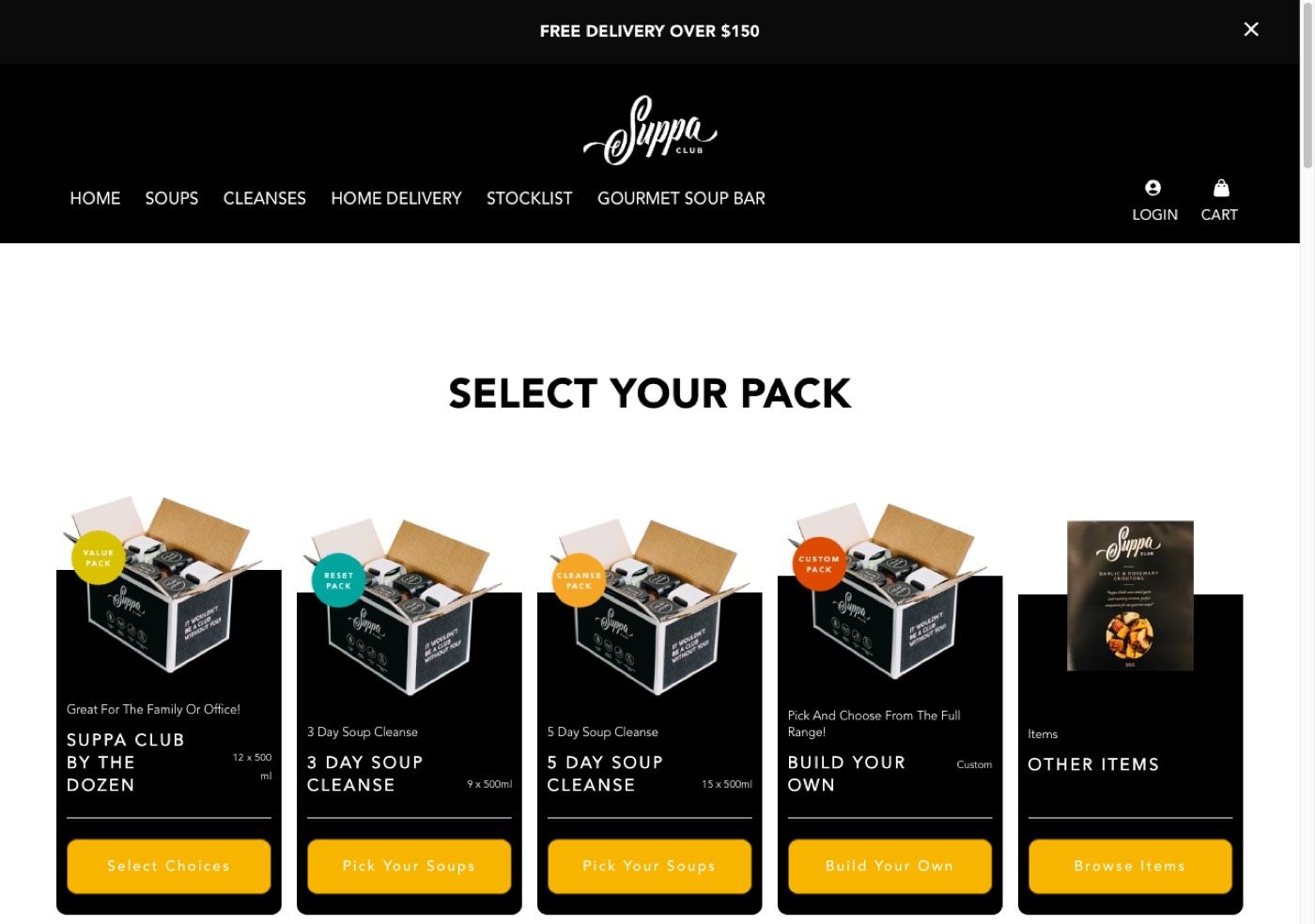
The owners needed to know whether their bundle app handled packs and multi-day cleanses, whether the kitchen could see what is in each box, whether delivery zones, minimums and free-delivery rules worked, why their email tool stopped syncing and whether events reached Meta and GA4.
Solution
Over two days I audited five sources in read-only mode: the Shopify admin, the live storefront with intercepted pixel requests, real orders, the theme code and Shopify's documentation. Each claim was backed by a screenshot or a repeatable test, and I re-ran the final check the next day. Every issue came with a fix that fits the store's plan, and who should do it.
Key decisions
Chose to keep the existing bundle app
Why It already supports exactly twelve soups, each as its own line with a box ID. The problems were in its settings, not the app.
Chose to stay on the current Shopify plan
Why Checkout validation with Functions needs a higher plan, so a minimum order for pickup is handled with a small public app.
Chose a built-in packing slip template over a paid printing app
Why The template can read line properties, the order time and the delivery postcode, which is enough to group soups by box and compute the delivery date.
Chose to test carts up to checkout without placing orders
Why It proved how pricing and delivery behave without touching real data.
Results
- A bilingual report with a problem, fix and owner table, about thirty screenshots and a new packing slip mock-up.
- Three critical issues identified in bundle pricing, delivery rules and packing slips, each with a prioritised fix.
- A tracking event matrix and a 301 redirect plan.